
 EN
EN

The compatibility of roll over wrap trays with high-speed packaging lines is a critical consideration for food processors, meat packers, and automated packaging facilities seeking to optimize throughput without compromising product integrity. As production demands intensify across the food industry, manufacturers are increasingly evaluating whether traditional tray formats can support the accelerated cycle times, precise handling requirements, and mechanical stresses inherent to modern high-speed operations. The structural design of roll over wrap trays directly influences their performance under rapid automated handling, making this compatibility question central to packaging line investment decisions and operational efficiency strategies.
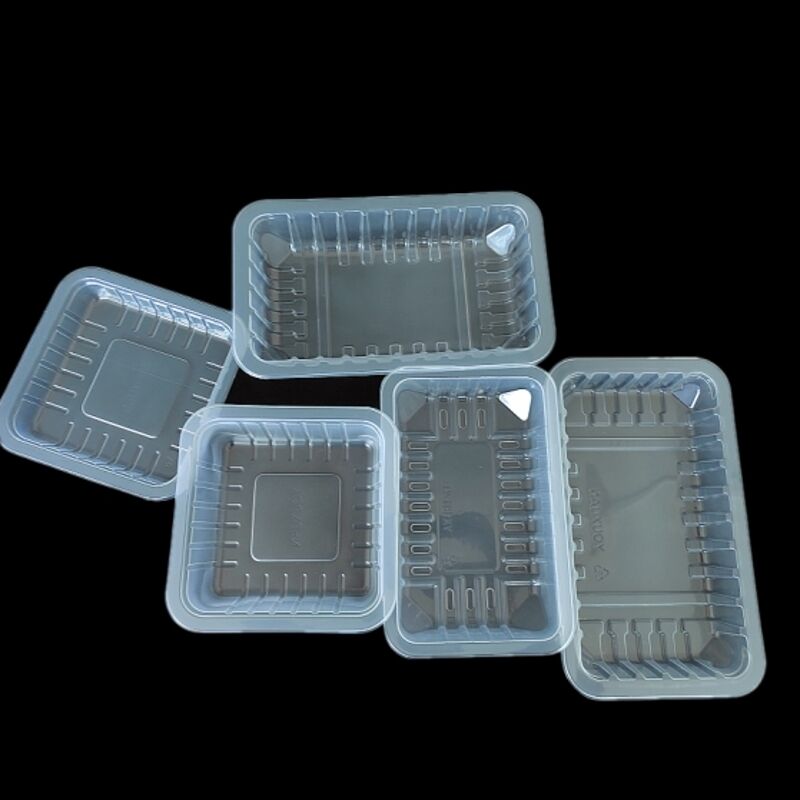
Understanding the relationship between tray structure and line speed capability requires examining multiple engineering factors including material properties, geometric stability, handling dynamics, and the specific demands imposed by wrapping equipment operating at elevated speeds. High-speed packaging lines typically operate at rates exceeding 60 packages per minute, with some advanced systems reaching 120 or more units per minute, creating unique mechanical challenges that not all tray designs can accommodate. The answer to compatibility lies in both the inherent structural characteristics of roll over wrap trays and the engineering considerations that determine their performance under accelerated production conditions.
Structural Engineering Fundamentals of Roll Over Wrap Trays
Material Composition and Mechanical Strength
The structural compatibility of roll over wrap trays with high-speed lines begins with material selection and forming technology. These trays are typically manufactured from expanded polystyrene, polyethylene terephthalate, or polypropylene substrates, each offering distinct mechanical properties that influence high-speed performance. The material must possess sufficient tensile strength to resist deformation during rapid handling while maintaining flexibility to absorb shock loads without cracking. Advanced roll over wrap trays incorporate multi-layer constructions or modified polymer formulations that enhance structural rigidity without adding excessive weight, a critical balance for high-speed conveyor systems.
The thickness and density profile of the tray substrate directly affects its ability to withstand the repetitive stresses encountered in automated packaging environments. High-speed operations subject trays to acceleration forces, sudden directional changes, and mechanical interactions with conveyor components, wrapping stations, and transfer mechanisms. Roll over wrap trays engineered for these conditions feature consistent wall thickness, reinforced corner geometries, and optimized material distribution that prevents structural failure even under continuous high-frequency handling. Material testing protocols evaluate crush resistance, flexural modulus, and impact strength to ensure compatibility with demanding line speeds.
Geometric Design and Dimensional Stability
The geometric configuration of roll over wrap trays plays a decisive role in high-speed compatibility, with dimensional precision becoming increasingly critical as line speeds escalate. The tray's footprint, height-to-width ratio, and rim design must align with the mechanical tolerances of automated handling equipment, which operate with minimal clearance margins at elevated speeds. Roll over wrap trays designed for high-speed applications feature standardized dimensions that ensure consistent positioning on conveyor systems, precise registration at wrapping stations, and reliable transfer between processing zones without jamming or misalignment.
Dimensional stability under varying temperature and humidity conditions is particularly important for roll over wrap trays operating in high-speed environments. Thermal expansion or moisture absorption can alter tray dimensions by fractions of millimeters, which may seem negligible but can cause significant disruptions in tightly synchronized automated systems. Advanced tray designs incorporate thermal stabilization additives and engineered polymer blends that minimize dimensional variance across typical food processing temperature ranges, ensuring consistent performance regardless of environmental fluctuations encountered during production.
Bottom Support Architecture and Load Distribution
The bottom structure of roll over wrap trays must provide adequate support for product loads while maintaining compatibility with conveyor systems operating at high speeds. The base design typically features a pattern of reinforcement ribs, embossed structures, or cellular architectures that distribute product weight evenly and prevent sagging or deflection during transport. These structural elements must be engineered to maintain tray flatness even when supporting heavy or irregularly shaped products, as any deformation can cause tracking problems on high-speed conveyors or interfere with wrapping film application.
The coefficient of friction between the tray bottom and conveyor surfaces represents another critical compatibility factor for high-speed operations. Roll over wrap trays must exhibit sufficient grip to prevent sliding during acceleration and deceleration phases while avoiding excessive friction that could impede smooth transport or cause premature wear on conveyor components. Surface texture, material composition, and bottom geometry collectively determine these friction characteristics, with optimal designs balancing secure positioning against minimal resistance to ensure reliable high-speed performance without imposing excessive mechanical loads on conveyor systems.
High-Speed Packaging Line Dynamics and Tray Interactions
Conveyor System Integration and Transfer Mechanisms
The compatibility of roll over wrap trays with high-speed packaging lines depends significantly on how these trays interact with conveyor systems during transport and transfer operations. Modern high-speed lines employ belt conveyors, chain conveyors, or modular plastic belt systems that move trays through multiple processing stations at precisely controlled velocities. Roll over wrap trays must maintain stable orientation throughout this journey, resisting tipping, rotation, or displacement even when subjected to the centrifugal forces encountered during directional changes or the impact forces experienced during zone transitions.
Transfer mechanisms represent critical compatibility checkpoints where roll over wrap trays must successfully transition between different conveyor sections or processing equipment without disruption. High-speed lines often incorporate timed pusher systems, vacuum pick-and-place units, or mechanical indexing devices that interact directly with tray structures. The rim design, sidewall configuration, and overall structural rigidity of roll over wrap trays must accommodate these handling mechanisms without deformation, ensuring reliable gripping, lifting, or pushing actions that maintain production continuity even at maximum line speeds.
Wrapping Station Compatibility and Film Application
The interaction between roll over wrap trays and high-speed wrapping equipment constitutes a primary compatibility consideration, as the tray structure directly influences film application quality and process reliability. Wrapping stations operating at high speeds require trays to arrive with precise positioning and remain stationary during the brief film application cycle, which may last only a fraction of a second. Roll over wrap trays must provide a consistent rim geometry that allows wrapping film to seal reliably around the tray perimeter while the structural design prevents distortion under the heat and pressure applied during the sealing process.
The surface characteristics of roll over wrap trays significantly affect film adhesion and seal integrity in high-speed wrapping operations. The tray's rim surface must be sufficiently smooth to permit complete film contact during sealing while maintaining adequate surface energy to ensure robust adhesive bonds with various film materials. Advanced roll over wrap trays incorporate surface treatments or material formulations that optimize compatibility with different wrapping film types, including polyethylene, polypropylene, and multi-layer barrier films commonly used in food packaging. This material compatibility ensures consistent seal strength even when processing speed reduces contact time between film and tray surfaces.
Product Stability During High-Speed Transport
Beyond structural integrity, roll over wrap trays must maintain product stability during high-speed transport to prevent shifting, spillage, or quality degradation that could trigger line stoppages or quality control rejections. The interior geometry of these trays features design elements such as corner radius optimization, sidewall angles, and bottom contours that cradle products securely even under the acceleration and vibration conditions characteristic of high-speed operations. These design features work in concert with the tray's overall structural stiffness to create a stable product environment that withstands the dynamic forces encountered throughout the packaging process.
The compatibility of roll over wrap trays with high-speed lines extends to moisture management and drainage capabilities, particularly important for fresh meat, poultry, and seafood applications where purge accumulation can compromise product presentation and accelerate spoilage. Advanced tray designs incorporate channeled bottom surfaces or absorbent pad positioning features that effectively manage moisture even when products experience the jostling and vibration inherent to rapid automated handling. This functional integration ensures that roll over wrap trays maintain both structural performance and product quality preservation capabilities throughout high-speed packaging operations.
Performance Factors Influencing High-Speed Compatibility
Cycle Time Requirements and Tray Handling Speed
The fundamental compatibility question centers on whether roll over wrap trays can be handled, filled, wrapped, and discharged within the compressed cycle times demanded by high-speed packaging lines. A line operating at 100 packages per minute allows only 0.6 seconds per package, requiring trays to move through each processing station with minimal dwell time. Roll over wrap trays designed for these conditions feature streamlined profiles that minimize catching points, optimized weight distribution that facilitates rapid acceleration, and structural consistency that ensures predictable behavior during every cycle regardless of accumulated throughput.
The response characteristics of roll over wrap trays under repetitive high-frequency handling determine long-term compatibility with sustained high-speed operations. Unlike slower packaging environments where trays experience periodic stress, high-speed lines subject these structures to continuous mechanical cycling that can reveal material fatigue, structural weakening, or geometric drift over extended production runs. Premium roll over wrap trays incorporate engineering plastics with superior fatigue resistance and employ manufacturing processes that eliminate stress concentration points, ensuring structural performance remains consistent even after thousands of handling cycles within a single production shift.
Temperature Tolerance and Thermal Processing
Many high-speed packaging operations involve thermal processes that test the temperature tolerance of roll over wrap trays, particularly in applications requiring hot-fill procedures, steam treatment, or elevated sealing temperatures. The compatibility of these trays with high-speed lines operating under thermal stress conditions depends on material selection and structural design that maintains dimensional stability and mechanical integrity across relevant temperature ranges. Roll over wrap trays engineered for these demanding applications utilize heat-resistant polymer formulations or incorporate thermal insulation features that prevent warping, softening, or structural collapse when exposed to elevated temperatures during rapid processing.
The thermal mass and heat dissipation characteristics of roll over wrap trays influence their performance in high-speed operations involving temperature cycling. Trays that absorb excessive heat during sealing operations may require extended cooling periods before subsequent handling, potentially creating bottlenecks that limit effective line speed. Optimized tray designs feature thin-wall construction in non-critical areas to minimize heat retention while maintaining structural reinforcement where mechanical strength is essential, allowing rapid thermal equilibration that supports continuous high-speed processing without temperature-induced delays or performance degradation.
Dimensional Consistency and Manufacturing Precision
The tight tolerances required for high-speed automated handling make manufacturing precision a critical compatibility determinant for roll over wrap trays. Dimensional variations between individual trays can cause intermittent performance issues that become magnified at elevated line speeds, where automation systems lack time to compensate for irregular tray dimensions. Advanced manufacturing processes for roll over wrap trays employ precision tooling, statistical process control, and automated inspection systems that ensure consistent dimensional accuracy within micrometers, providing the uniformity essential for reliable high-speed operation across entire production batches.
Stack stability and nesting characteristics of roll over wrap trays affect their compatibility with high-speed denesting and dispensing equipment that feeds packaging lines. Trays must separate reliably from nested stacks without sticking or jamming while maintaining sufficient structural integrity to prevent damage during automated dispensing operations. The rim design, sidewall draft angles, and surface finish of roll over wrap trays collectively determine nesting behavior, with optimal configurations enabling rapid, reliable denesting that supports continuous high-speed line feeding without manual intervention or mechanical disruptions.
Engineering Considerations for High-Speed Implementation
Line Configuration and Equipment Integration
Successfully implementing roll over wrap trays on high-speed packaging lines requires careful attention to equipment configuration and integration parameters that influence overall system compatibility. The spacing between processing stations, conveyor speed synchronization, and transfer timing must be calibrated to accommodate the specific handling characteristics of roll over wrap trays while maximizing throughput. Line designers must consider tray acceleration limits, maximum safe transport velocities, and minimum dwell times required for reliable wrapping operations, ensuring that equipment settings align with the physical capabilities and limitations of the chosen tray structure.
Sensor systems and quality control integration represent important compatibility considerations when deploying roll over wrap trays on high-speed lines. Vision systems, weight checkers, and seal integrity monitors must function reliably despite the rapid passage of trays through inspection zones, requiring tray designs that provide clear sightlines for cameras, stable platforms for weight measurement, and consistent presentation for seal verification. Advanced roll over wrap trays incorporate design features that facilitate automated inspection, such as contrasting colors for visual detection, flat surfaces for weight sensor accuracy, and predictable geometry for dimensional verification systems.
Failure Mode Analysis and Reliability Engineering
Understanding potential failure modes for roll over wrap trays under high-speed conditions enables proactive engineering solutions that enhance compatibility and system reliability. Common failure mechanisms include rim cracking under repeated sealing cycles, bottom deflection causing product instability, and sidewall buckling during mechanical handling. Comprehensive failure mode analysis guides material selection, structural reinforcement strategies, and quality control protocols that minimize these risks, ensuring that roll over wrap trays maintain consistent performance throughout their intended service life even under the demanding conditions of high-speed automated packaging.
Reliability engineering principles applied to roll over wrap trays focus on establishing performance margins that accommodate the normal variation encountered in high-speed operations. Rather than designing trays to barely meet minimum performance requirements, reliability-centered approaches incorporate safety factors that ensure consistent functionality even when facing occasional process variations such as temperature fluctuations, handling misalignments, or material property variance. This conservative engineering philosophy produces roll over wrap trays with robust compatibility across a range of high-speed packaging scenarios, reducing the likelihood of unexpected failures that could disrupt production or necessitate costly line stoppages.
Customization Options for Specific Line Requirements
While standard roll over wrap trays offer broad compatibility with many high-speed packaging configurations, certain applications benefit from customized structural modifications that optimize performance for specific line requirements. Custom rim geometries can enhance sealing reliability with particular wrapping equipment, modified bottom structures can improve stability on specialized conveyor systems, and tailored material formulations can address unique temperature or chemical exposure conditions. Engaging with experienced tray manufacturers during line design phases enables the development of optimized roll over wrap trays that maximize compatibility with specific high-speed packaging equipment and process parameters.
The economic considerations of tray customization must be balanced against standardization benefits, particularly for facilities operating multiple packaging lines or processing diverse product ranges. Excessive customization can complicate inventory management, increase per-unit costs, and reduce operational flexibility when switching between different product lines or packaging formats. Strategic customization focuses on modifications that deliver substantial performance improvements in high-speed compatibility while maintaining reasonable commonality with standard tray designs, ensuring that operational benefits justify any incremental costs or complexity associated with specialized roll over wrap trays.
Practical Validation and Performance Verification
Testing Protocols for High-Speed Compatibility Assessment
Validating the compatibility of roll over wrap trays with high-speed packaging lines requires comprehensive testing protocols that simulate actual production conditions and quantify performance across relevant parameters. Mechanical testing evaluates structural strength under impact loading, compression resistance, and flexural rigidity to ensure trays can withstand handling forces at elevated speeds. Thermal testing assesses dimensional stability across temperature ranges encountered during sealing and cooling operations. Dynamic testing on actual packaging equipment measures tracking accuracy, transfer reliability, and wrapping consistency at target line speeds, providing empirical data that confirms real-world compatibility.
Accelerated life testing subjects roll over wrap trays to repetitive cycling that simulates extended production runs, revealing potential fatigue failures or performance degradation that might not appear during short-term trials. These tests typically involve thousands of handling cycles under controlled conditions that replicate high-speed operations, with periodic measurements documenting any changes in dimensional accuracy, structural integrity, or functional performance. Successful completion of accelerated life testing provides confidence that roll over wrap trays will maintain consistent compatibility throughout sustained high-speed production without unexpected failures or performance deterioration.
Quality Metrics and Performance Benchmarks
Establishing clear quality metrics and performance benchmarks enables objective assessment of roll over wrap trays compatibility with high-speed packaging requirements. Key performance indicators include successful cycle completion rate, seal integrity percentage, dimensional conformance statistics, and mean time between handling failures. These metrics provide quantitative measures of tray performance that can be compared against operational targets and used to identify opportunities for process optimization or tray design refinement. Continuous monitoring of these metrics during production operations ensures that roll over wrap trays maintain acceptable compatibility levels throughout their service life.
Comparative performance analysis between different roll over wrap trays designs or material formulations provides valuable insights for optimizing high-speed compatibility. Controlled testing under identical line conditions reveals how specific design features or material characteristics influence handling reliability, wrapping quality, and overall system throughput. This empirical approach to compatibility assessment enables evidence-based decisions regarding tray selection, supporting investments in designs that deliver superior performance in demanding high-speed packaging environments while avoiding options that might appear adequate based on specifications alone but fail to perform reliably under actual production conditions.
Continuous Improvement and Optimization Strategies
Achieving optimal compatibility between roll over wrap trays and high-speed packaging lines represents an ongoing process rather than a one-time design achievement. Continuous improvement methodologies incorporate feedback from production operations, quality control data, and equipment maintenance records to identify opportunities for enhancing tray performance or refining handling processes. Regular review cycles evaluate whether changing product mixes, evolving line configurations, or advancing material technologies might enable improved compatibility through modified tray designs or updated processing parameters.
Collaborative relationships between packaging operations personnel, equipment manufacturers, and tray suppliers facilitate the knowledge exchange necessary for sustained high-speed compatibility optimization. Production teams provide practical insights regarding real-world tray performance under various operating conditions, equipment specialists contribute technical expertise regarding handling system capabilities and limitations, and tray manufacturers offer material science knowledge and design engineering capabilities. This collaborative approach generates innovations in roll over wrap trays structure and high-speed packaging integration that continuously advance compatibility performance beyond baseline requirements.
FAQ
What maximum line speed can roll over wrap trays typically support without performance degradation?
Well-engineered roll over wrap trays can reliably support packaging line speeds ranging from 60 to 120 packages per minute depending on tray size, product weight, and specific handling equipment configuration. Premium tray designs with optimized structural characteristics and precision manufacturing tolerances have been successfully implemented on lines exceeding 150 packages per minute in certain applications. The actual maximum speed achievable depends on multiple factors including tray material properties, geometric design, conveyor system specifications, and wrapping equipment capabilities, making it essential to conduct application-specific compatibility testing rather than relying solely on general speed ratings.
Do roll over wrap trays require special modifications to work on high-speed packaging lines?
Standard roll over wrap trays designed with robust structural characteristics can often function effectively on high-speed lines without special modifications, provided the tray specifications align with the handling equipment requirements and operational parameters. However, certain high-speed applications may benefit from customized features such as enhanced rim reinforcement for improved sealing reliability, optimized bottom geometry for specific conveyor systems, or modified material formulations for demanding temperature conditions. The need for modifications depends on the specific line configuration, product characteristics, and performance targets, with many successful high-speed implementations utilizing well-designed standard tray formats without customization.
How do material costs compare between standard trays and versions optimized for high-speed compatibility?
Roll over wrap trays specifically engineered for high-speed compatibility typically carry a modest cost premium compared to basic tray designs, generally ranging from five to fifteen percent depending on the specific enhancements incorporated. This incremental cost reflects the precision manufacturing processes, premium material formulations, and enhanced quality control measures necessary to ensure consistent high-speed performance. However, this cost differential is often offset by reduced downtime, fewer line disruptions, improved packaging quality, and higher overall throughput, making high-speed optimized trays economically advantageous in demanding production environments despite their slightly higher per-unit cost.
Can existing packaging lines be retrofitted to accommodate roll over wrap trays at higher speeds?
Many existing packaging lines can be upgraded to achieve higher speeds with roll over wrap trays through targeted equipment modifications, control system optimization, and careful process parameter tuning. Successful speed increases typically require assessment of conveyor capacity, wrapping station cycle time, transfer mechanism performance, and overall system synchronization to identify and address limiting factors. In some cases, relatively modest upgrades such as servo drive installation, improved sensors, or optimized conveyor surfaces enable significant speed improvements. However, older equipment with fundamental mechanical limitations may require more substantial retrofitting or replacement of critical components to reliably achieve substantial speed increases while maintaining packaging quality and system reliability.
Table of Contents
- Structural Engineering Fundamentals of Roll Over Wrap Trays
- High-Speed Packaging Line Dynamics and Tray Interactions
- Performance Factors Influencing High-Speed Compatibility
- Engineering Considerations for High-Speed Implementation
- Practical Validation and Performance Verification
-
FAQ
- What maximum line speed can roll over wrap trays typically support without performance degradation?
- Do roll over wrap trays require special modifications to work on high-speed packaging lines?
- How do material costs compare between standard trays and versions optimized for high-speed compatibility?
- Can existing packaging lines be retrofitted to accommodate roll over wrap trays at higher speeds?