
 EN
EN
The integrity of packaging during meat transport determines both product quality and economic efficiency for processors, distributors, and retailers throughout the cold chain. Film punctures represent one of the most persistent challenges in modified atmosphere packaging systems, compromising shelf life, contaminating products, and generating significant financial losses. The rolled edge meat tray has emerged as a critical engineering solution specifically designed to address this vulnerability through structural innovation that protects both the packaging film and the product it contains.
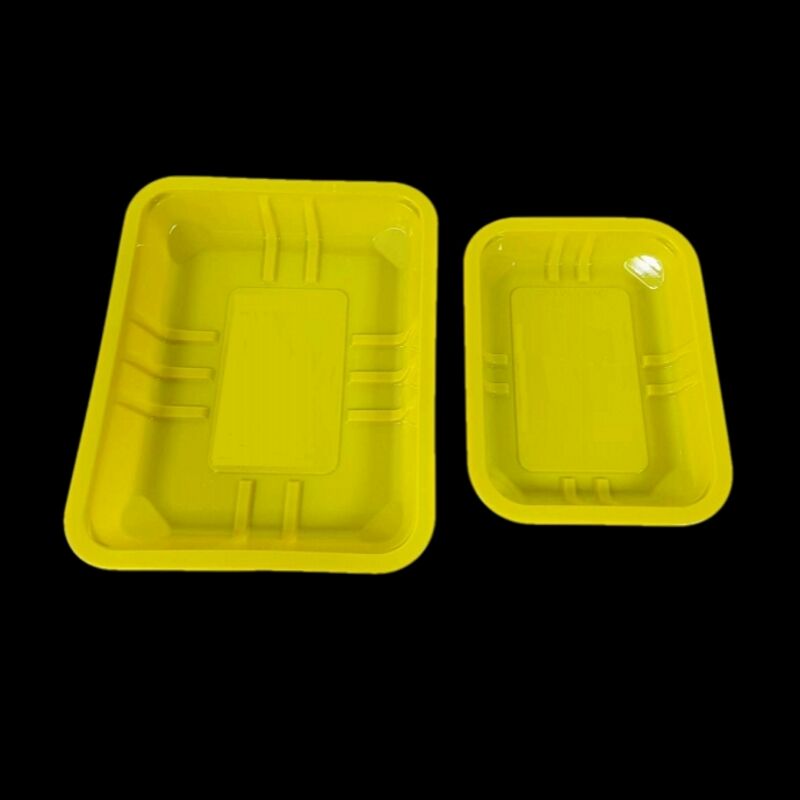
Understanding why the rolled edge meat tray provides essential protection requires examining the mechanical interactions between tray edges, packaging films, and the dynamic forces encountered during handling, stacking, and transportation. Sharp or angular tray edges create concentrated stress points that puncture delicate barrier films when subjected to compression, vibration, or impact. The rolled edge design redistributes these mechanical stresses across a broader surface area, eliminating the acute angles that would otherwise compromise film integrity under normal transport conditions.
The Mechanical Vulnerability of Standard Tray Edges
Stress Concentration at Angular Contact Points
Standard meat trays with conventional right-angle or sharp edges create fundamental mechanical problems during the sealing and transport process. When packaging film is heat-sealed or stretched across these angular edges, the material experiences extreme localized tension at the contact points. The physics of material stress distribution demonstrates that sharp corners concentrate force into minimal surface areas, creating vulnerability zones where even modest external pressure can initiate tears or punctures in the protective barrier film.
During stacking operations in refrigerated transport vehicles, trays positioned above exert downward force that transfers through contact points. Sharp tray edges beneath the overlying packages function essentially as cutting implements, progressively wearing through the film barrier through repeated micro-movements caused by vehicle vibration and road conditions. This mechanical abrasion process accelerates dramatically when rolled edge meat tray alternatives are not employed, as the concentration of forces remains unmitigated throughout the journey from processing facility to retail display.
Film Material Properties Under Compression
Barrier films used in modified atmosphere packaging systems exhibit specific mechanical characteristics that determine their puncture resistance. Most multilayer films incorporate polyethylene, polyamide, or EVOH barriers that provide excellent gas transmission control but possess limited resistance to sharp object penetration. The tensile strength of these materials performs adequately when forces distribute evenly across surfaces, but performance degrades rapidly when encountering concentrated pressure from angular tray edges.
Temperature fluctuations during cold chain transport further complicate film integrity. Refrigerated conditions cause polymer films to become more brittle and less elastic, reducing their ability to deform around sharp edges without tearing. A rolled edge meat tray addresses this temperature-related vulnerability by eliminating the sharp geometric features that would exploit the film's reduced flexibility in cold environments. The continuous curved surface maintains protective contact with the film regardless of temperature variations encountered during multi-stage distribution networks.
Engineering Advantages of Rolled Edge Design
Force Distribution Through Curved Geometry
The fundamental engineering principle underlying rolled edge meat tray effectiveness involves transforming point-load stress into distributed surface contact. Instead of forcing packaging film to conform to acute angles, the rolled edge presents a gradual radius that allows the film to maintain consistent tension without creating failure initiation points. This geometric modification changes the stress distribution pattern from concentrated to dispersed, dramatically reducing the probability of puncture under equivalent loading conditions.
Finite element analysis of packaging systems reveals that rolled edges can reduce peak stress concentrations by factors of three to five compared to sharp-cornered alternatives. This reduction translates directly into enhanced puncture resistance during the multiple handling events that characterize modern meat distribution networks. From initial packaging through warehouse storage, refrigerated transport, retail receiving, and display preparation, each handling event subjects the package to potential compression and impact forces that the rolled edge meat tray design specifically mitigates.
Material Contact Area Optimization
Beyond simple stress distribution, the rolled edge increases the total contact area between tray and film, creating a more stable mechanical interface. Greater contact area provides additional friction resistance that helps prevent film displacement during transport vibration and handling. This friction component becomes particularly important when packages experience lateral forces during cornering, braking, or sorting operations in automated distribution centers.
The increased contact area also improves seal integrity at the tray perimeter where heat-sealing processes bond the film to the substrate. Sharp edges create inconsistent sealing surfaces that may generate weak points in the hermetic closure, while the continuous curved profile of a rolled edge meat tray provides uniform substrate geometry that facilitates consistent seal formation. This dual benefit of puncture prevention and enhanced seal quality establishes the rolled edge as essential rather than merely advantageous for high-value protein products requiring extended shelf life.
Transport Dynamics and Puncture Risk Factors
Vibration and Resonance Effects
Transport vehicles generate complex vibration patterns that transmit through stacked package configurations, creating dynamic loading conditions far more challenging than static compression. Road surface irregularities, engine harmonics, and suspension characteristics combine to produce oscillating forces that cause packages to shift relative to each other. These micro-movements generate repetitive friction and impact between adjacent packages, with sharp tray edges functioning as abrasive elements that progressively damage overlying film surfaces.
Rolled edge meat tray designs eliminate this progressive abrasion mechanism by substituting smooth curved surfaces for the sharp angles that would otherwise function as cutting edges. The continuous radius prevents the grabbing or catching behavior that sharp corners exhibit when packages shift during transport. Field studies comparing puncture rates between rolled edge and standard tray configurations consistently demonstrate significant reductions in film damage when rolled edge meat tray technology is employed throughout distribution networks extending beyond regional distances.
Stacking Height and Cumulative Load Pressure
Modern cold chain logistics frequently involve pallet configurations stacking packages five to seven layers high to maximize cubic utilization in refrigerated trailers and warehouse spaces. Lower tray layers experience cumulative weight from all overlying packages, with force concentration at edge contact points creating maximum puncture risk at the bottom of stack configurations. Without rolled edge protection, these bottom layer packages face the highest probability of film failure.
The rolled edge meat tray distributes these cumulative loads across broader contact surfaces, preventing the pressure concentration that would otherwise puncture through films at load-bearing points. This load distribution capability becomes increasingly critical as supply chains extend and products traverse longer distances through multiple handling facilities. Each additional handling event and each additional hour in transport increases cumulative exposure to puncture risk, making the protective advantages of rolled edge meat tray design essential for maintaining package integrity from processor to consumer.
Economic and Quality Implications
Product Loss Prevention and Shelf Life Maintenance
Film punctures compromise the modified atmosphere environment essential for extending fresh meat shelf life, allowing oxygen infiltration that accelerates bacterial growth and discoloration. Even microscopic punctures invisible during visual inspection can permit sufficient gas exchange to reduce product shelf life by days or weeks. For premium meat products commanding higher retail prices, this quality degradation represents substantial economic loss that extends beyond simple product disposal costs.
The rolled edge meat tray prevents these quality failures by maintaining film integrity throughout distribution, preserving the carefully engineered gas composition that controls microbial activity and oxidative reactions. Processors who adopt rolled edge configurations report measurably reduced claims for product quality issues, shorter credit cycles, and stronger retailer relationships built on consistent delivery of specification-compliant products. These quality assurance benefits accumulate across entire production volumes, generating return on investment that far exceeds the modest incremental cost of rolled edge tooling and materials.
Labor and Operational Efficiency Gains
Beyond direct product loss prevention, rolled edge meat tray designs reduce labor requirements associated with package inspection, rework, and damage documentation throughout the supply chain. Distribution centers handling thousands of packages daily realize significant productivity improvements when puncture rates decline, as workers spend less time identifying and segregating damaged goods for return processing or disposal. The reduction in exception handling streamlines warehouse operations and reduces the administrative burden associated with tracking and resolving quality incidents.
Retail operations similarly benefit from reduced handling of compromised packages that would otherwise require markdown, repackaging, or disposal. Store-level labor productivity improves when receiving departments process clean shipments without damage inspection and documentation requirements. The operational efficiency gains from rolled edge meat tray adoption extend throughout multi-party supply chains, creating shared value that strengthens commercial relationships between processors, distributors, and retail partners.
Material Science and Manufacturing Considerations
Substrate Properties for Edge Formation
Creating effective rolled edges requires substrate materials with specific thermoforming characteristics that permit controlled deformation without cracking or material thinning. Polystyrene foam, PET, and polypropylene substrates each present distinct forming challenges when manufacturing rolled edge meat tray configurations. The forming temperature window must accommodate both the deep draw required for tray depth and the precise radius control necessary for consistent edge geometry that optimizes film contact without creating sharp transitions.
Material thickness specifications balance structural rigidity requirements against forming capability and cost optimization. Thinner substrates reduce material costs but may lack the structural integrity to maintain consistent edge geometry under stacking loads. Rolled edge meat tray manufacturers employ sophisticated tooling designs that control material flow during forming operations, ensuring uniform wall thickness distribution that maintains edge radius consistency across production volumes measuring millions of units annually.
Tooling Design and Process Control
Thermoforming tools for rolled edge meat tray production incorporate specialized edge details that form the protective radius during the molding cycle. Tool designers must account for material shrinkage, draw ratios, and cooling characteristics that influence final edge geometry. Process parameters including forming temperature, vacuum timing, and cooling rates require careful optimization to achieve the dimensional consistency essential for reliable film protection across entire production batches.
Quality control protocols for rolled edge meat tray manufacturing focus heavily on edge radius verification, as dimensional variation directly impacts puncture prevention performance. Automated inspection systems measure edge profiles at multiple points around tray perimeters, flagging out-of-specification units before they enter distribution channels. This quality assurance emphasis reflects industry recognition that the rolled edge feature provides critical functionality rather than cosmetic enhancement, making dimensional precision essential for achieving the puncture prevention objectives that justify the design investment.
FAQ
What radius specification is optimal for rolled edges on meat packaging trays?
Industry standards typically specify rolled edge radii between two and four millimeters depending on substrate thickness and film characteristics. Larger radii provide enhanced puncture protection but may reduce usable tray interior dimensions, while smaller radii approach the stress concentration issues they're designed to eliminate. Most commercial rolled edge meat tray designs employ three-millimeter radii as an effective compromise balancing protection performance against space efficiency and manufacturing feasibility.
Do rolled edge meat trays require different sealing equipment compared to standard trays?
Rolled edge configurations are compatible with standard heat-sealing and modified atmosphere packaging equipment without requiring specialized tooling modifications. The continuous curved edge profile actually facilitates more consistent sealing performance compared to sharp-cornered alternatives by providing uniform contact surfaces for seal bar engagement. Some processors report improved seal consistency when transitioning to rolled edge meat tray formats due to the elimination of corner stress concentrations that can create seal integrity challenges.
How do rolled edges affect tray nesting and shipping cube efficiency?
Properly designed rolled edge meat tray configurations maintain nesting compatibility equivalent to standard sharp-edge alternatives, preserving shipping density for empty tray shipments from substrate manufacturers to meat processors. The edge radius modification occurs at the tray perimeter exterior where it does not interfere with internal nesting surfaces. Some designs achieve marginally improved nesting stability due to the increased contact area between nested units, though this benefit varies by specific geometry and substrate material characteristics.
Can existing thermoforming tools be modified to add rolled edges to current tray designs?
Tool modification feasibility depends on current edge geometry and available material in the tool steel. Many conventional tray tools can be retrofitted with rolled edge profiles through precision machining that removes the sharp corner and substitutes a controlled radius. This modification approach offers cost advantages compared to complete tool replacement while achieving the puncture prevention benefits that make rolled edge meat tray designs essential for quality-focused meat packaging operations seeking to reduce distribution damage and extend product shelf life.
Table of Contents
- The Mechanical Vulnerability of Standard Tray Edges
- Engineering Advantages of Rolled Edge Design
- Transport Dynamics and Puncture Risk Factors
- Economic and Quality Implications
- Material Science and Manufacturing Considerations
-
FAQ
- What radius specification is optimal for rolled edges on meat packaging trays?
- Do rolled edge meat trays require different sealing equipment compared to standard trays?
- How do rolled edges affect tray nesting and shipping cube efficiency?
- Can existing thermoforming tools be modified to add rolled edges to current tray designs?