
 EN
EN
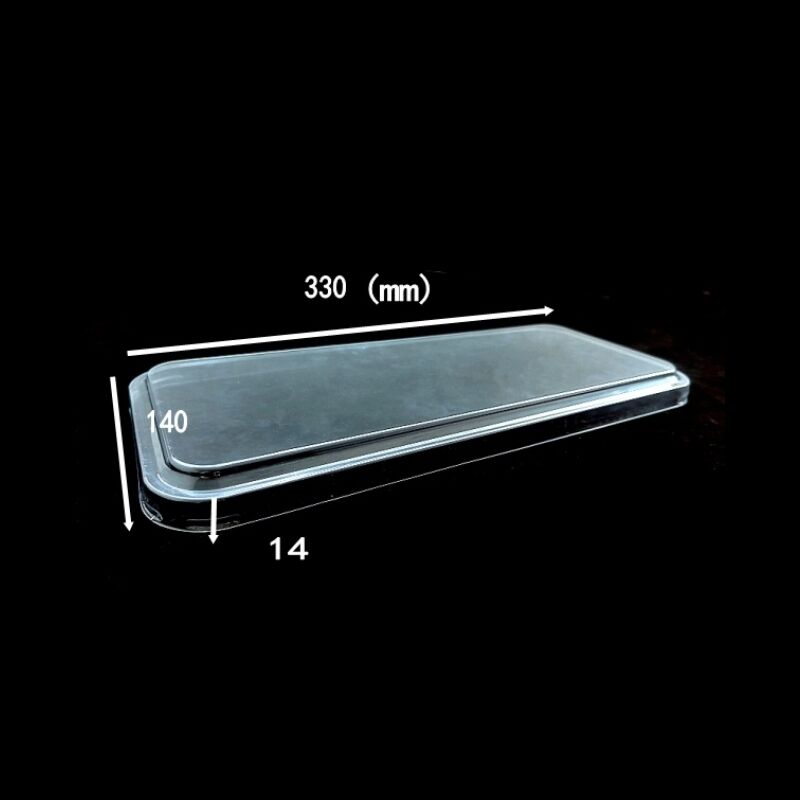
Modern food processing facilities face mounting pressure to increase throughput, maintain hygiene standards, and reduce labor costs while ensuring product quality remains consistent. Automated packing workflows have become the backbone of high-volume meat processing operations, yet their success hinges on packaging components that integrate seamlessly with robotic systems, conveyor mechanisms, and quality control checkpoints. The plastic meat tray serves as a critical interface between raw product and automated handling equipment, functioning not merely as a container but as a precision-engineered component designed to meet the exact dimensional, structural, and material requirements of mechanized packing lines.
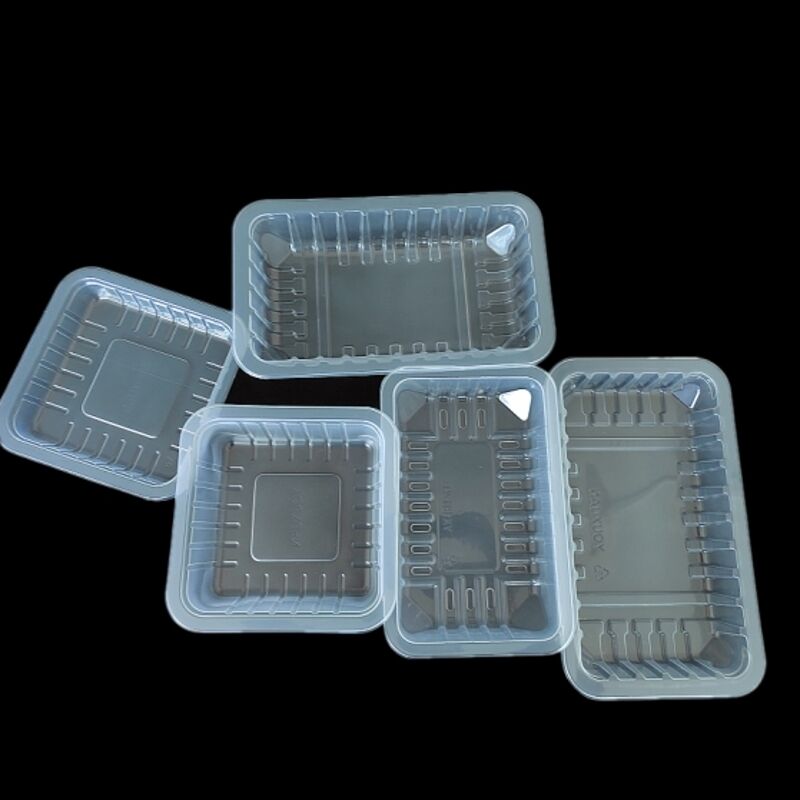
Understanding how the plastic meat tray integrates into these complex systems requires examining the mechanical, dimensional, and material characteristics that enable reliable automated handling. From robotic pick-and-place operations to high-speed wrapping stations, every stage of the automated workflow imposes specific demands on tray design, rigidity, and surface properties. This article explores the technical relationship between plastic meat tray specifications and the functional requirements of automated food packing systems, revealing how tray engineering directly impacts line efficiency, product protection, and operational reliability in industrial meat processing environments.
Dimensional Precision and Robotic Handling Compatibility
Standardized Footprint Requirements for Conveyor Integration
Automated packing lines operate on the principle of consistent spatial positioning, where every component must occupy a predictable location throughout the handling sequence. The plastic meat tray achieves conveyor compatibility through precisely controlled external dimensions that align with standard belt widths, transfer mechanisms, and accumulation zones. Manufacturing tolerances typically maintained within ±0.5mm ensure that trays travel smoothly through guide rails, turning mechanisms, and merge points without jamming or misalignment. This dimensional consistency becomes particularly critical at high-speed intersections where timing synchronization depends on uniform tray footprints entering detection zones at calculated intervals.
Conveyor systems designed for meat packing workflows incorporate sensors that detect tray presence, position, and orientation based on edge recognition and height profiling. The plastic meat tray must present consistent reference surfaces that trigger these sensors reliably across thousands of cycles per shift. Variations in base flatness or rim geometry can cause false reads or missed detections, disrupting the timing coordination between upstream filling stations and downstream wrapping equipment. Engineers specify tray designs with reinforced perimeter structures that maintain geometric stability even when subjected to the vibration, acceleration, and directional changes inherent in multi-stage conveyor networks.
Gripper Interface Design for Robotic Transfer Operations
Robotic pick-and-place systems represent the most demanding application for plastic meat tray handling, requiring surface features that enable secure gripping without product contamination or tray deformation. Vacuum cup grippers commonly used in food automation rely on smooth, flat landing zones on the tray base or rim where suction can establish reliable contact. The plastic meat tray incorporates molded grip zones with controlled surface finish specifications—typically 32 microinches Ra or smoother—to ensure consistent seal formation across varying environmental conditions including temperature fluctuations and residual moisture.
Alternative gripper technologies including mechanical clamps and magnetic systems impose different requirements on tray architecture. Clamp-style end effectors demand reinforced rim sections capable of withstanding localized compression forces without cracking or permanent deformation, while maintaining food-safe material properties. The structural design of the plastic meat tray addresses these mechanical loads through strategic rib placement and wall thickness optimization, creating grip zones that absorb handling forces while preserving tray integrity throughout multiple automation touchpoints. This engineering balance ensures that trays remain dimensionally stable from initial filling through final package formation, preventing position drift that would compromise downstream wrapping accuracy.
Stacking Stability During Automated Buffer Storage
High-throughput meat packing operations frequently incorporate buffer zones where filled trays accumulate temporarily to manage flow rate mismatches between processing stages. The plastic meat tray must exhibit predictable stacking behavior that prevents column collapse, lateral shifting, or product damage during these accumulation periods. Specialized rim geometry featuring interlocking elements or stabilization ribs enables vertical stacking without requiring external support structures, maximizing buffer capacity within limited floor space while maintaining instant accessibility for automated retrieval systems.
Stack stability under dynamic conditions becomes particularly important when buffer zones utilize mobile rack systems or automated storage-retrieval mechanisms that introduce acceleration forces during positioning movements. The plastic meat tray achieves stable stacking through carefully calculated nesting ratios—typically 70-85% depth reduction when nested—that balance space efficiency against structural resistance to lateral displacement. Material selection influences stacking performance significantly, with formulations that maintain adequate stiffness at refrigerated temperatures preventing stack compression that would otherwise compromise tray geometry and disrupt downstream handling precision.
Material Properties Enabling Automated Processing Environments
Thermal Stability Across Temperature Transition Zones
Automated meat packing workflows routinely subject packaging materials to rapid temperature changes as products move from refrigerated storage through ambient handling zones to chilled display environments. The plastic meat tray must maintain dimensional stability and mechanical properties across temperature ranges typically spanning -5°C to 25°C within facility environments. Polymer formulations designed for automated handling incorporate additives that preserve impact resistance and flexural modulus at low temperatures, preventing brittleness that would cause tray failure during robotic transfer operations or conveyor transitions.
Thermal expansion coefficients become operationally significant in precision automation systems where dimensional changes of even fractions of a millimeter can disrupt sensor alignment or gripper positioning. Advanced plastic meat tray formulations utilize polymer blends engineered to minimize thermal expansion while maintaining processability during thermoforming manufacturing. This material stability ensures that trays maintain consistent footprints and reference surfaces regardless of temperature exposure history, eliminating positioning errors that would otherwise require real-time compensation algorithms in robotic control systems.
Surface Friction Optimization for Controlled Conveyor Movement
Conveyor belt interfaces require carefully balanced friction characteristics in the plastic meat tray base surface to prevent both excessive slippage and grip-induced jamming. Coefficient of friction values typically targeted in the 0.3-0.5 range enable reliable traction during acceleration and deceleration phases while allowing smooth transitions through curved sections and elevation changes. Surface texture specifications derived from mold finish parameters create micro-roughness patterns that maintain consistent friction properties despite exposure to moisture, meat protein residues, and sanitation chemical contact.
Automated systems incorporating inclined conveyors or vertical lift mechanisms impose additional friction requirements on plastic meat tray design. Excessive slippage on inclined surfaces can cause tray drift and collision events, while insufficient slip resistance on horizontal transfers may result in product spillage during emergency stops. Material engineers address these competing requirements through surface treatment technologies including plasma modification or additive incorporation that tune friction properties independently from bulk mechanical characteristics, ensuring the plastic meat tray performs reliably across all conveyor configurations within a facility's automation architecture.
Static Dissipation Properties for Electronic Sensor Compatibility
Modern automated packing lines rely extensively on optical sensors, capacitive proximity detectors, and vision systems that can experience interference from static charge accumulation on plastic surfaces. The plastic meat tray designed for high-speed automation incorporates antistatic additives or inherently conductive polymer blends that limit surface resistivity to levels below 10^11 ohms per square, preventing charge buildup that could attract dust contamination or disrupt sensor function. This electrical property management becomes particularly critical in low-humidity environments where static generation rates increase significantly, potentially causing missed reads in barcode scanners or false triggers in product presence detectors.
Charge dissipation requirements extend beyond sensor compatibility to encompass product quality concerns, as static discharge events can affect meat surface appearance and potentially introduce electromagnetic interference in sensitive weighing systems. The engineering approach for the plastic meat tray balances conductivity requirements against food safety regulations that restrict conductive additive selection to approved substances with documented migration limits. This careful material formulation ensures that trays function effectively within the electromagnetic environment of automated facilities without compromising regulatory compliance or introducing quality risks to packaged products.
Integration with Automated Filling and Weighing Systems
Weight Stability for In-Line Scale Accuracy
Automated meat packing workflows increasingly incorporate in-line weighing systems that verify product mass without interrupting flow, requiring the plastic meat tray to exhibit exceptional weight consistency across production batches. Tare weight variations exceeding ±1 gram can compromise scale accuracy in systems targeting ±2 gram product weight tolerances, making material uniformity and process control during tray manufacturing critical factors in overall system performance. Thermoforming process parameters including heating uniformity, forming pressure distribution, and cooling rates directly influence final tray weight by affecting material distribution and density patterns within the molded structure.
Dynamic weighing systems that measure product mass while trays remain in motion on conveyors demand even tighter weight consistency specifications from the plastic meat tray. Vibration dampening characteristics inherent in the tray structure can influence measurement stability by affecting how kinetic energy dissipates during the weighing interval. Engineers optimize tray geometry to minimize resonance frequencies that coincide with typical conveyor speeds, ensuring that structural vibrations do not introduce noise into weight measurements. This attention to dynamic mechanical properties enables automated systems to achieve the measurement precision necessary for accurate portion control and regulatory compliance verification.
Nested Rim Design for Automated Filling Head Clearance
Automated filling stations employ positioning systems that lower product into trays with minimal clearance to maximize placement accuracy and minimize drop distance. The plastic meat tray must provide sufficient rim height to contain product securely while maintaining edge profiles that prevent interference with filling equipment nozzles, chutes, or robotic end effectors. Rim geometry typically incorporates chamfered or radiused edges that guide filling heads into proper alignment while providing visual and tactile feedback to vision systems that verify correct tray positioning before product release.
Clearance requirements become particularly stringent in systems handling irregularly shaped meat cuts where automated vision systems assess product dimensions before selecting appropriate tray positions. The plastic meat tray designed for these applications features internal geometry with smooth transitions and minimal undercuts that prevent product hang-up during filling while providing clear boundary references for vision algorithms. This geometric optimization ensures that filling accuracy remains consistent across diverse product sizes and shapes, reducing waste from misfills or spillage events that would otherwise require manual intervention and line stoppages.
Drainage Feature Integration for Purge Management
Meat products naturally release moisture and purge during storage, necessitating plastic meat tray designs that manage fluid accumulation without compromising product presentation or creating sanitation concerns in automated handling equipment. Molded drainage channels and absorbent pad retention features must function reliably throughout the automated workflow without interfering with gripper contact zones, sensor detection surfaces, or conveyor interfaces. Engineers achieve this multifunctional design through computational modeling that predicts fluid flow patterns and optimizes channel placement to direct purge away from product contact surfaces while maintaining the structural integrity required for automated handling.
Automated systems that incorporate tray washing and reuse cycles impose additional drainage requirements, as residual water retention can affect subsequent tray weight consistency and introduce contamination risks. The plastic meat tray engineered for reusable applications features self-draining geometries with strategically positioned drain holes that evacuate cleaning solutions completely during inverted drying cycles. This drainage optimization reduces cycle times in wash systems while ensuring that trays return to production lines with consistent weight and cleanliness characteristics that meet both automation requirements and food safety standards.
Compatibility with High-Speed Wrapping and Sealing Equipment
Flange Geometry for Film Registration and Seal Formation
Automated overwrap systems that apply transparent film to the plastic meat tray require precise flange geometry that guides film positioning and provides consistent sealing surfaces. Flange width specifications typically ranging from 8-15mm must accommodate both the heat seal zone and the mechanical clamping surfaces that hold film tension during the sealing cycle. The plastic meat tray incorporates flange design features including slight upward angles or textured grip zones that prevent film slippage during high-speed wrapping while maintaining smooth release characteristics after seal completion.
Thermal properties of the flange material become critical during heat sealing operations, as excessive heat absorption can cause tray deformation while insufficient thermal conductivity may result in incomplete seals. Material formulations for the plastic meat tray balance thermal conductivity requirements with structural stability needs, often incorporating mineral fillers that enhance heat distribution without compromising impact resistance. This thermal engineering ensures consistent seal quality across varying line speeds and ambient temperature conditions, maintaining package integrity throughout distribution and retail display environments.
Dimensional Tolerance Requirements for Modified Atmosphere Packaging
Modified atmosphere packaging systems that flush trays with protective gas mixtures before sealing demand exceptional dimensional consistency from the plastic meat tray to maintain seal integrity and atmosphere retention. Rim flatness deviations exceeding 0.3mm can create leak paths that compromise gas barrier performance, reducing shelf life and product quality. Manufacturing processes for automated packaging applications incorporate in-line measurement systems that verify critical tray dimensions, rejecting units that fall outside specifications before they enter filling and sealing operations where dimensional defects would cause costly downtime and product waste.
Gas flush nozzles in automated MAP systems rely on predictable tray cavity volumes to calculate appropriate gas quantities and flush durations, making internal dimension consistency another critical performance parameter for the plastic meat tray. Volume variations exceeding 3-5% can result in inadequate oxygen displacement or excessive gas consumption, affecting both product protection and operational economics. Precision thermoforming processes achieve the volumetric consistency required for MAP applications through closed-loop control systems that monitor forming parameters and adjust processing conditions in real-time, ensuring every plastic meat tray meets the tight tolerances demanded by high-speed automated packaging lines.
Anti-Fog Film Compatibility and Condensation Management
Refrigerated display environments create temperature differentials that promote condensation on package films, obscuring product visibility unless properly managed through material selection and tray design. The plastic meat tray contributes to condensation control through surface energy characteristics that influence how moisture interacts with both tray surfaces and applied films. Material formulations incorporating specific additives create hydrophobic tray surfaces that minimize water retention and prevent droplet formation that would otherwise drip onto product surfaces or interfere with label adhesion.
Automated packaging lines increasingly utilize anti-fog films that require compatible sealing surfaces to maintain their condensation resistance properties throughout the package lifecycle. The plastic meat tray designed for anti-fog film applications features rim surface treatments that preserve film coating integrity during heat sealing operations, avoiding chemical interactions or mechanical abrasion that would compromise fog resistance. This material compatibility extends package shelf appeal while supporting automated vision inspection systems that verify product quality through transparent overwrap films immediately after packaging completion.
Downstream Handling and Distribution Considerations
Palletization Pattern Stability and Load Bearing Performance
Automated palletizing systems arrange packaged trays in optimized patterns that maximize pallet utilization while maintaining stack stability during transportation and storage. The plastic meat tray must exhibit sufficient compressive strength to support multiple layers of product weight without excessive deformation that would compromise stack geometry or damage bottom-layer contents. Structural reinforcement strategies including ribbing patterns, corner gussets, and wall thickness optimization distribute loads evenly across the tray base, enabling stack heights that fully utilize trailer cube space while maintaining product integrity throughout distribution networks.
Dynamic loading conditions during transportation introduce additional mechanical demands on the plastic meat tray structure, as vibration and impact events can propagate through pallet stacks and concentrate stress at package interfaces. Material selection for automated packaging applications prioritizes impact resistance and fatigue endurance properties that prevent crack initiation and propagation under repeated loading cycles. This durability engineering ensures that trays maintain protective functionality from production line through retail display, eliminating package failures that would compromise product quality and create costly claims or recalls.
Automated Sorting and Distribution Center Compatibility
Modern distribution networks employ automated sorting systems that route packages based on barcode scanning, weight verification, and dimensional profiling. The plastic meat tray contributes to successful sorting operations through consistent external dimensions that trigger proper lane diversion and through structural rigidity that prevents package deformation during high-speed transfers and accumulation zones. Packages that exhibit dimensional instability or excessive flex during automated handling risk misrouting or jam events that disrupt facility throughput and require manual intervention to clear.
Barcode scanning reliability in automated distribution systems depends partly on label substrate stability, with the plastic meat tray providing a rigid mounting surface that maintains barcode flatness and readability throughout handling sequences. Surface characteristics including gloss level and color uniformity affect scanner performance, making material selection and mold finish specifications important factors in overall system reliability. The plastic meat tray engineered for distribution automation incorporates surface properties optimized for both direct printing applications and pressure-sensitive label adhesion, ensuring consistent scan rates that meet the throughput demands of high-volume distribution operations.
Retail Display Integration and Consumer Handling Ergonomics
Automated packaging workflows must ultimately deliver products in formats that perform effectively in retail display cases and consumer handling scenarios. The plastic meat tray designed for automated systems balances mechanical requirements for robotic handling against aesthetic and functional needs at point of sale. Transparency requirements, color consistency, and surface finish specifications established for retail appeal must coexist with structural features that enabled successful automated processing, requiring integrated design approaches that consider the complete product lifecycle from manufacturing through consumer purchase.
Ergonomic considerations influence plastic meat tray design parameters including rim profiles that facilitate consumer grasping, base contours that enable stable placement on inclined display surfaces, and corner radii that prevent package nesting in shopping carts. These consumer-focused features must integrate seamlessly with automation requirements, avoiding design conflicts that would compromise either manufacturing efficiency or end-use functionality. Successful tray engineering achieves this balance through iterative design validation that tests prototypes in both automated production environments and simulated retail conditions, ensuring optimal performance across all application stages.
FAQ
What specific dimensions must a plastic meat tray maintain for automated handling systems?
Automated handling systems require plastic meat tray dimensions to maintain tolerances within ±0.5mm for critical features including overall length, width, and rim flatness. Base flatness typically must not deviate more than 0.3mm across the sealing surface to ensure proper film adhesion and gas barrier performance in modified atmosphere applications. Gripper interface zones demand surface flatness specifications of 32 microinches Ra or better to enable reliable vacuum cup contact, while stacking rim features require consistent heights within ±0.8mm to prevent stack instability during buffer storage and palletization operations.
How does plastic meat tray material selection affect conveyor speed capabilities?
Material properties directly influence maximum conveyor speeds through their effects on friction characteristics, impact resistance, and dimensional stability under dynamic loading. Formulations with optimized friction coefficients in the 0.3-0.5 range enable reliable traction during high-speed acceleration without causing jamming in transfer zones, while impact-modified polymers prevent crack propagation from repeated collisions at merge points and diverters. Thermal stability of the material maintains dimensional consistency as trays transition through temperature zones, preventing position drift that would limit throughput speeds. High-performance plastic meat tray materials enable line speeds exceeding 120 packages per minute while maintaining positioning accuracy within ±2mm for downstream wrapping operations.
Can existing automated lines accommodate different plastic meat tray designs without modification?
Automated packing lines designed with adjustable tooling and programmable control systems can typically accommodate plastic meat tray variations within defined dimensional ranges, usually ±10-15% of nominal specifications. Gripper systems with vacuum cup arrays on flexible mounts adapt to minor footprint changes, while servo-driven conveyor guides allow width adjustments without mechanical reconfiguration. However, significant changes to tray depth, rim geometry, or base contour often require tooling modifications including custom gripper plates, filling nozzle repositioning, or film sealing head adjustments. The most flexible automated systems incorporate vision-guided robotics and adaptive control algorithms that automatically compensate for tray variations, reducing changeover times and expanding the range of compatible plastic meat tray designs without hardware modifications.
What testing validates plastic meat tray performance in automated workflows before production deployment?
Comprehensive validation testing for plastic meat tray designs includes dimensional verification using coordinate measuring machines to confirm critical tolerances, mechanical testing to assess compressive strength and impact resistance under simulated handling conditions, and material analysis to verify friction coefficients and thermal stability across operating temperature ranges. Functional testing on pilot-scale automation equipment evaluates gripper compatibility through cycle testing exceeding 10,000 repetitions, conveyor performance across speed ranges from minimum to maximum line rates, and sealing quality using production-equivalent wrapping systems. Environmental stress testing subjects trays to temperature cycling, humidity exposure, and mechanical vibration profiles that replicate distribution conditions, ensuring structural integrity throughout the complete product lifecycle from automated filling through retail display and consumer use.
Table of Contents
- Dimensional Precision and Robotic Handling Compatibility
- Material Properties Enabling Automated Processing Environments
- Integration with Automated Filling and Weighing Systems
- Compatibility with High-Speed Wrapping and Sealing Equipment
- Downstream Handling and Distribution Considerations
-
FAQ
- What specific dimensions must a plastic meat tray maintain for automated handling systems?
- How does plastic meat tray material selection affect conveyor speed capabilities?
- Can existing automated lines accommodate different plastic meat tray designs without modification?
- What testing validates plastic meat tray performance in automated workflows before production deployment?